But Cloudflare WAF controls can drift as administrators change security settings, disable managed rules, loosen rate limits, or add exceptions that weaken enforcement.
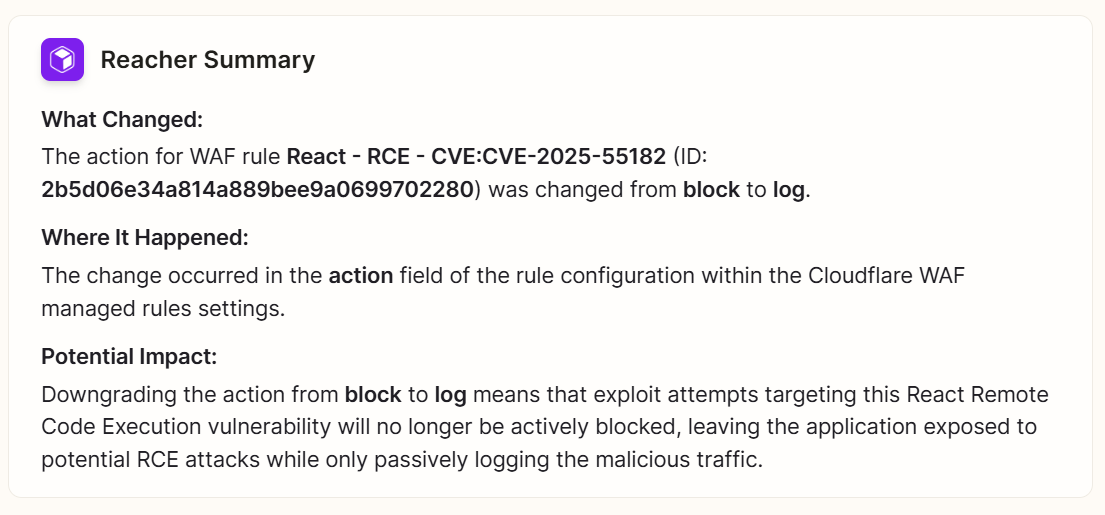
Cloudflare Managed Rulesets help block exploit attempts targeting vulnerabilities such as Log4j, React RCE, and Atlassian Confluence code injection. Reach detects when managed rules are disabled or downgraded from [block] to [log], leaving exploit traffic recorded but not stopped. This helps teams restore active protection before known attack techniques pass through unmitigated.

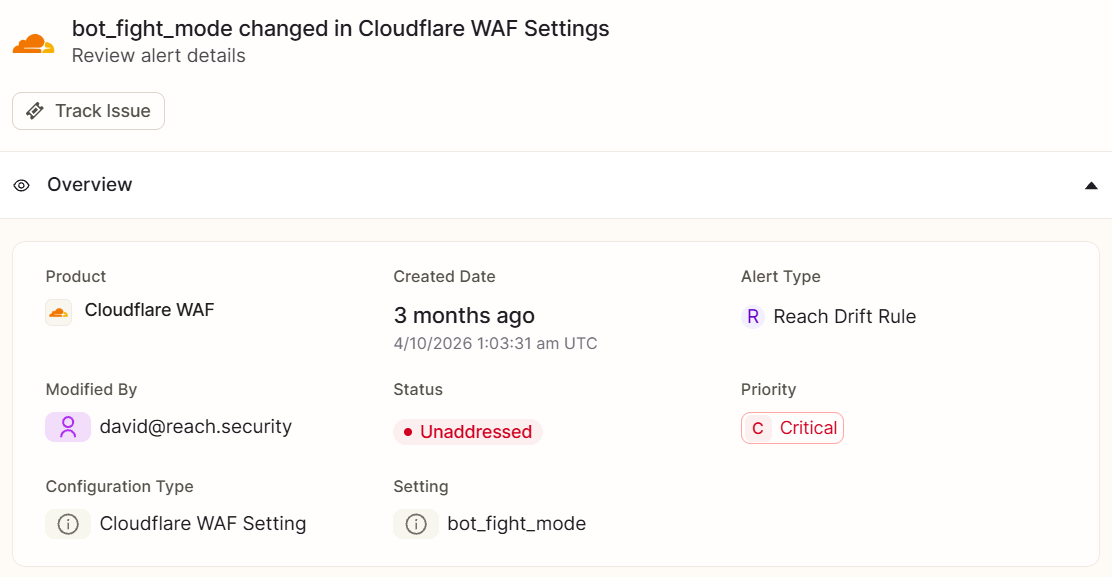
Cloudflare WAF settings such as Bot Fight Mode, Leaked Credential Checks, and Security Level help stop bot traffic, credential stuffing, scraping, and automated abuse. Reach identifies high-impact drift, such as [bot_fight_mode] being turned off, leaked credential checks being disabled, or [security_level] being lowered from [under_attack]. This helps teams quickly reverse changes that reduce bot and account takeover protection.

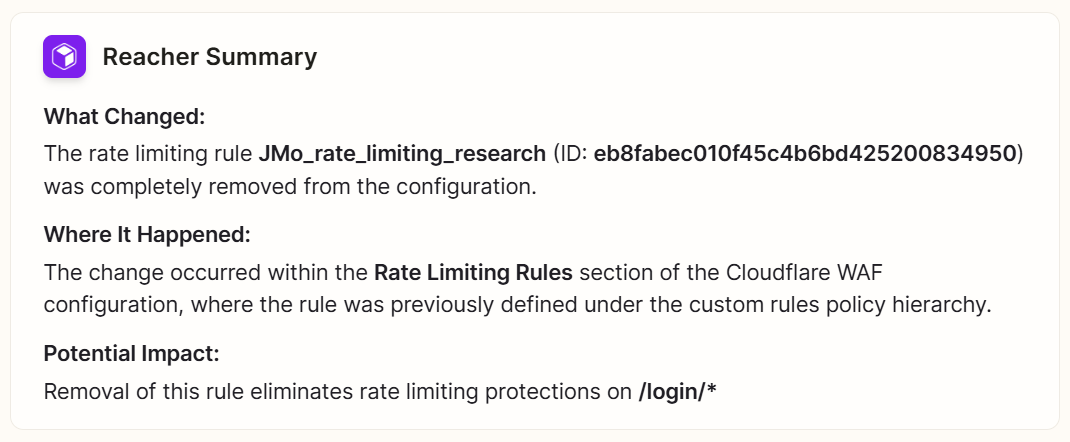
Cloudflare Custom Rules and rate limiting rules control how applications respond to suspicious requests, brute force attempts, and abusive traffic patterns. Reach analyzes rule changes such as weakened rate limits, broad allow rules, or WAF skip conditions that let traffic bypass inspection. This helps security teams preserve intended enforcement and prevent abuse, brute force attacks, and DDoS traffic from slipping through.

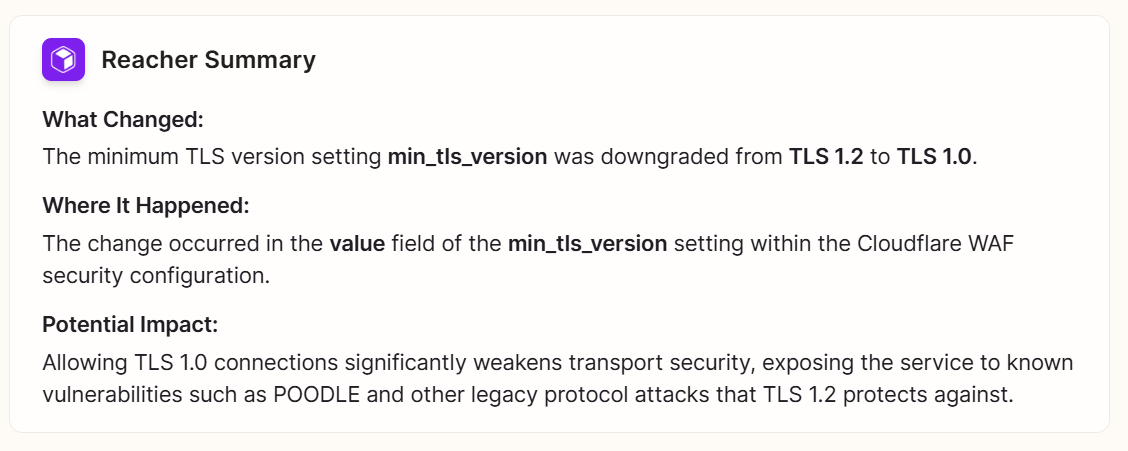
Cloudflare WAF posture also depends on secure platform settings such as minimum TLS version, IP lists, page rules, and zone-level security configuration. Reach detects risky changes like [min_tls_version] being downgraded from TLS 1.2 to TLS 1.0 or new IP list entries that expand trusted access. By continuously monitoring drift, Reach helps ensure Cloudflare WAF remains hardened against outdated protocols, risky exceptions, and unintended exposure.

To join the community of customers enjoying the benefits of Reach and learn more about how it can transform your security posture, visit: