13 Drift Events a Day: See How Much Drift Is Already Happening in Your Environment
Get the report

Integrations
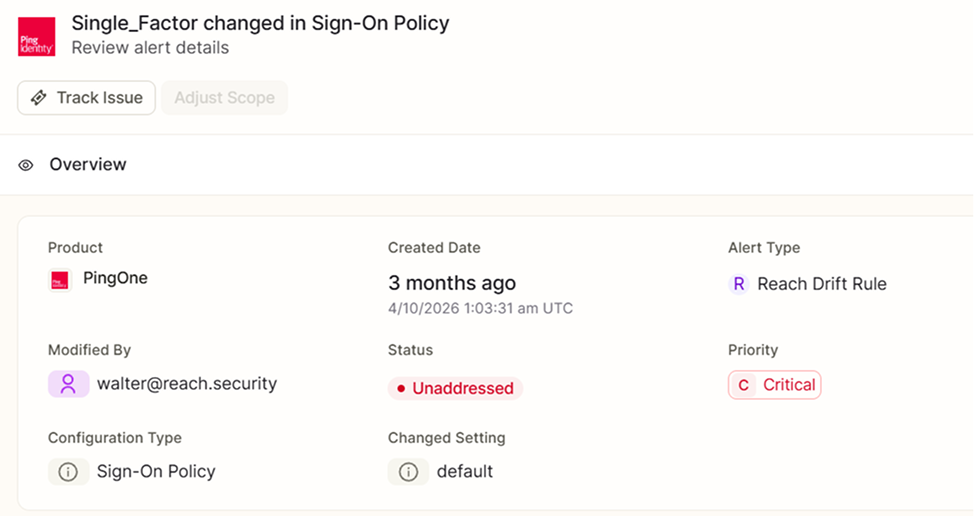
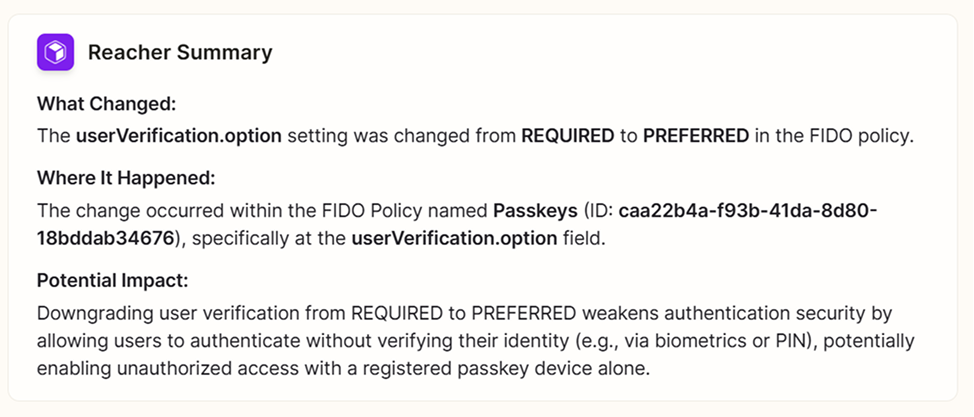
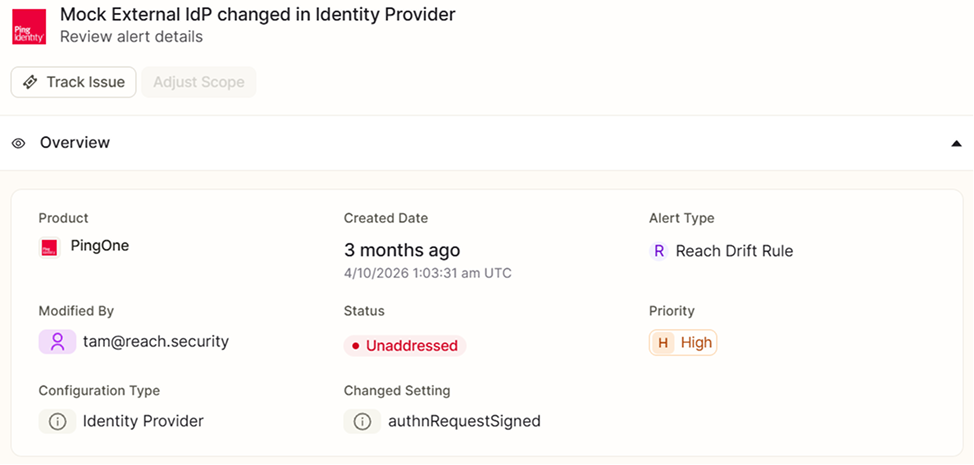
Reach analyzes your PingOne deployment to identify misconfigurations, weakened authentication settings, and configuration drift across sign-on, MFA, application, IdP, and alerting controls. Reach prioritizes fixes and validates that PingOne identity protections remain aligned with security intent.

The Challenge
PingOne provides cloud-delivered identity services for secure authentication, SSO, MFA, application access, and identity orchestration across workforce and customer environments.
.svg)
Unlock the full power of your security stack with a free tool rationalization assessment.
Request a Demo

Read-only API key for a security tool of your choice

Create your account and setup the integration

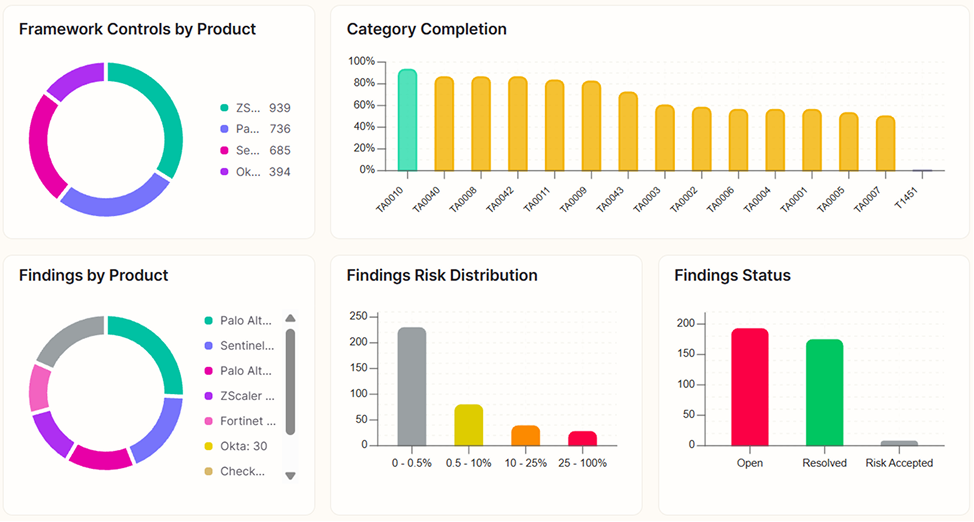
Get results across licensing, control mapping, risk exposure, and posture